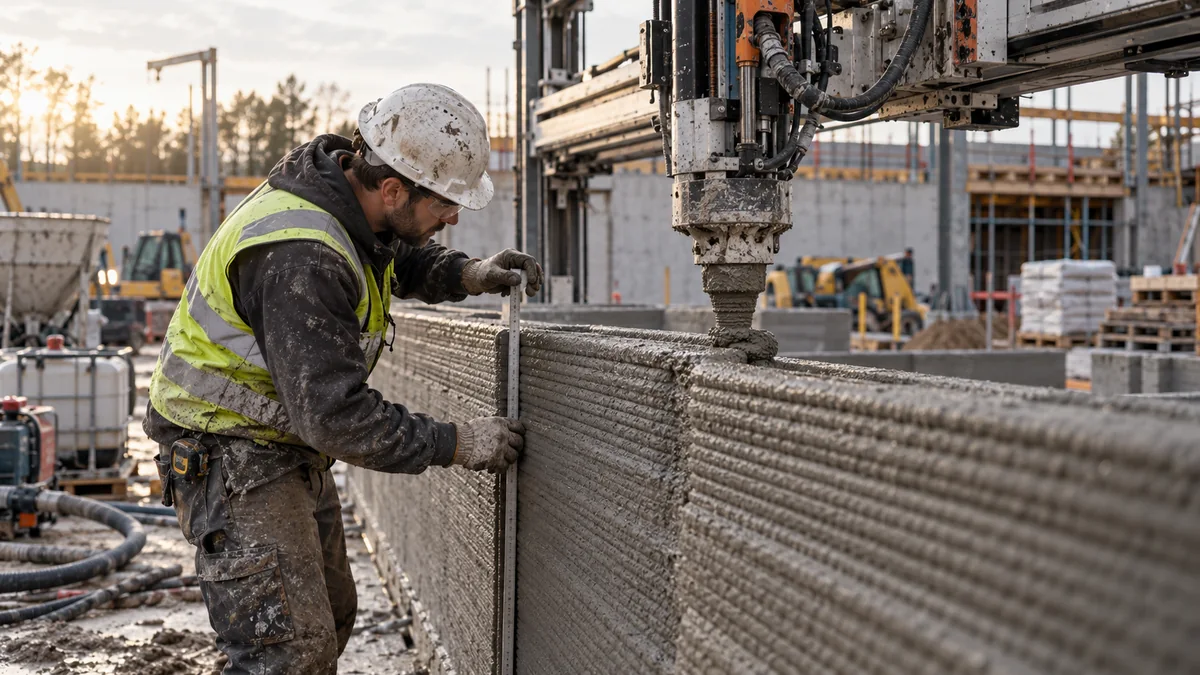
A concrete printer can make a wall look easy. The important questions begin when someone has to approve the material, inspect the layers and take responsibility for the building years later.
The news behind the headline
NIST hosted “Additive Construction – The Path to Standardization Continues” in July 2026. The event sits within its work on materials, measurements and technical approaches for extrusion-based additive construction.
What changes on site
A printed wall is formed in successive passes. That changes the questions for the crew and the designer: how consistent is each batch, how well do adjacent layers bond, where does reinforcement go, and which checks are possible once the wall is complete? Conventional trades still have to coordinate penetrations, services, openings and finishing.
Before calling a method job-ready
A research meeting is not a building approval. The real test is a documented system that meets the rules for the location and application: structural design, tested materials, construction tolerances, quality control and inspection. That work may be less photogenic than watching a nozzle move, but it is what makes a new method usable.
References and original documents
This is an independent explanation, not a hands-on test or endorsement.
- NIST — Workshop / research programme, 29–31 July 2026
Research and conference demonstrations are not a substitute for qualified procedures, safety training, manufacturer instructions or product approvals in your jurisdiction.