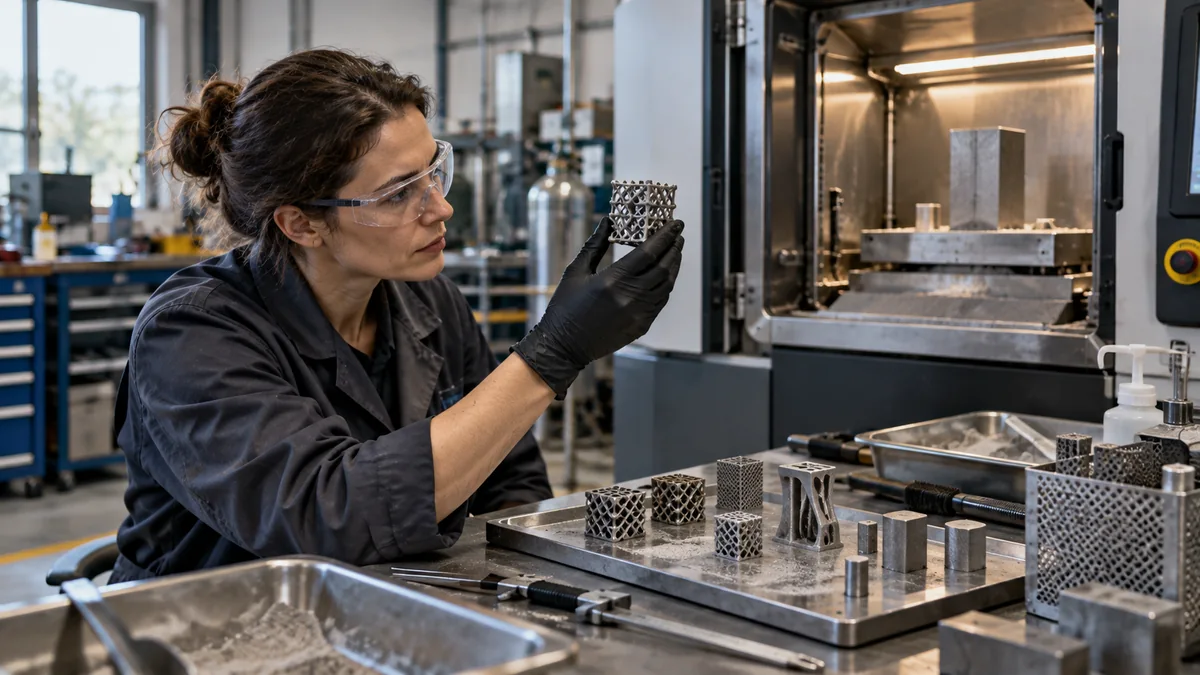
A metal 3D printer can melt a powder bed precisely and still produce a poor alloy if the ingredients do not mix. That problem becomes harder when the metals have very different properties.
The experiment
In June 2026, NIST described a method that makes the laser trace looping paths rather than simple straight tracks. The loops stir the tiny molten pool during laser powder bed fusion. The team combined this approach with high-speed X-ray measurements to see what happened as the metals melted and solidified.
Why anyone in metalwork should care
The work addresses a basic materials question: how do you keep an alloy reasonably uniform throughout the finished part? Better control might expand the range of compositions that additive manufacturing can produce and study, including hard-to-mix high-entropy alloys.
What it does not mean
This is not a universal upgrade for a standard desktop or industrial printer. NIST says the researchers wrote custom software because conventional commercial controls could not produce the required laser pattern. Real parts still need process development, property testing and qualification before anyone can rely on them.
References and original documents
This is an independent explanation, not a hands-on test or endorsement.
- NIST — Research news, 4 June 2026
Research and conference demonstrations are not a substitute for qualified procedures, safety training, manufacturer instructions or product approvals in your jurisdiction.